Providers maintain the official chart, but patients generally have a legal right to inspect or receive copies of their protected health information under HIPAA, with limited exceptions.
- Health Data Privacy
- Patient Rights
Understanding Your Rights to Your Medical Records
Many patients know they should be able to get their records, but fewer know what the law actually says. This guide explains your medical records rights, what HIPAA covers, and how to use those rights in a practical way.

Medically reviewed by
Board-Certified Clinical Informatics Physician
Updated on March 10, 2026

Key takeaways
- Patients generally have a right to inspect or get copies of their health information from providers and health plans under HIPAA.
- A provider can charge a reasonable cost-based fee for copies, but cannot deny access just because a bill is unpaid.
- Your rights include more than getting copies. You can also ask for corrections, request electronic delivery when available, and track what records you still need from each provider.
- A personal record system helps you use your rights in practice because requested documents are only useful if you can find, review, and share them later.
Your Medical Records Belong to You
Many patients assume they should be able to access their records, but they are often unsure where that right starts and where it stops. They may know a portal exists, yet still wonder whether they can request the full chart, whether a clinic can charge for copies, or whether they can challenge something that looks wrong in the record.
That uncertainty matters. If you do not understand your patient medical records rights, it becomes much easier for delays, confusing office processes, or incomplete portal access to make you feel like the information is not really yours to use. In practice, it is hard to coordinate care, prepare for a second opinion, or switch providers confidently when you do not know what you can ask for.
Under HIPAA, patients generally have the right to inspect or obtain copies of protected health information held by providers and health plans, with some limited exceptions. That does not mean every office makes the process easy, but it does mean you are not asking for a favor when you request access. You are exercising a real right.
1. The Right to Access Is Broader Than Most Portals
One reason patients underestimate their rights is that many people equate “my records” with “whatever appears in my portal.” Portals are useful, but they are not always the whole story. A portal may show recent lab results, visit summaries, and medication lists, while the full record may include additional documents, correspondence, scanned forms, imaging reports, operative notes, or older materials that are not presented clearly online.
That is why access to medical records law matters in real life. If the portal is incomplete, you can still request the information directly from the provider or health plan. For many patients, that is the step that turns a frustrating partial picture into a usable record they can actually review and organize.
It also helps to think in terms of goals rather than documents. Sometimes you need the entire file. Sometimes you only need the last year of visit notes, your pathology report, or the records related to one hospital admission. Being specific often speeds up the process, but being specific is a strategy choice, not a legal requirement to already know exactly how the office files everything.
2. Your Rights Include Timing, Format, and Reasonable Fees
Patients often focus on the right to ask, but the operational details matter too. HIPAA access rights are useful because they include obligations on the provider side. In general, covered entities must act on a request within 30 days. If they need more time, they can usually take one 30-day extension, but they must tell you why. That timeline matters when you are trying to prepare for surgery, move care to a new system, or gather records for a family member.
Format also matters. If an electronic copy is available, patients can often ask for that format rather than a paper packet. That may sound like a small detail, but it changes what you can do next. A searchable PDF or digital record is easier to store, review, and use alongside privacy focused features than a thick envelope of paper you have to scan later.
It is also easier to compare what you received against the security model of the tool you plan to use. If you are collecting records from multiple offices, the next question is not only whether you can get the file, but whether the destination behaves like a real secure medical records app instead of a generic storage folder with weak privacy assumptions.
Fees are another area of confusion. Providers can usually charge a reasonable cost-based fee for copies, but they cannot turn unpaid bills into a reason to deny access altogether. That distinction is important because many patients hesitate to ask if they have an outstanding balance. The billing dispute and the right of access are not the same issue.
3. You Can Ask for Corrections, Not Just Copies
Access rights are only part of the picture. Patients also have a process for requesting an amendment if they believe information is incomplete or incorrect. That does not mean every request is automatically granted. A provider may deny an amendment request in some circumstances, especially if the provider believes the record is accurate as written. But they still have to respond, and the process exists for a reason.
This matters because records shape future care. A mistaken medication history, an incomplete allergy entry, or a misleading summary can create downstream confusion. Even when a chart cannot be edited exactly the way a patient wants, asking for clarification or correction can still improve what future clinicians see.
If you notice a problem, document what looks wrong, gather anything that supports your concern, and make the request in writing. Precision helps. “This is wrong” is weaker than “This chart lists an active medication I stopped six months ago; please update the medication list to reflect the current regimen.”
4. Knowing Your Rights Is Different From Being Ready to Use Them
Many patients technically have access rights but still cannot benefit from them because the information remains scattered. One hospital sends a PDF by portal, another mails a CD, a specialist prints a summary, and the patient ends up with pieces of a record but no working system.
That is why the practical side matters just as much as the legal side. Once you receive records, you need a place to review them, compare them, and bring them to future appointments. Otherwise, every request starts from scratch again.
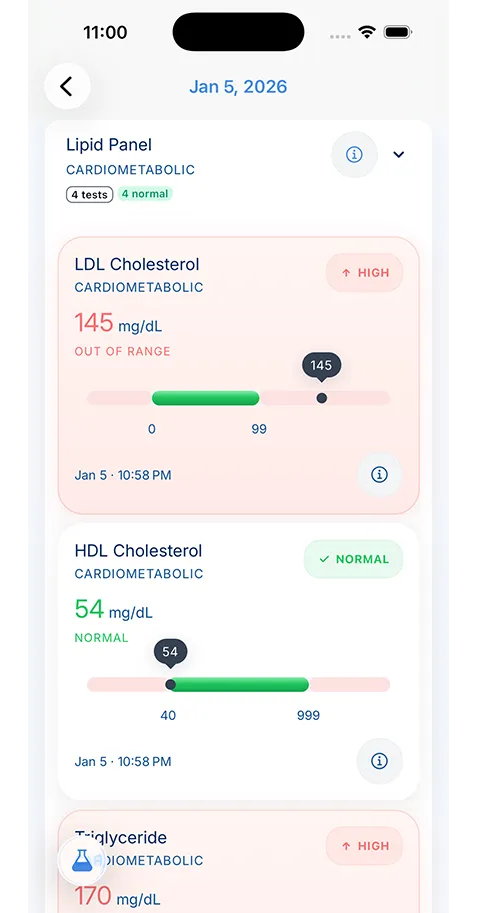
This is where good record organization supports your rights. If you can see which providers you have already collected from, which documents are missing, and which records are outdated, you are much more likely to use those rights effectively. It is the same reason patients who keep digital health records tend to feel more prepared during care transitions.
5. A Simple Way to Use Your Rights This Month
One more practical point matters here: HIPAA sets a federal floor, but real-world access can still vary depending on state law, provider workflow, and the kind of record you are seeking. Mental health notes, records tied to ongoing legal proceedings, or documents created by outside organizations may involve different handling rules or exceptions. That does not mean you should assume you have no access. It means you should ask precise questions when a provider says something cannot be released and request the explanation in writing when needed.
For most patients, the biggest improvement comes from replacing passive uncertainty with a simple process. Request the record, track the response, review what arrived, and keep the file organized for future care. That is how “medical records access rights” stops being a phrase you searched once and becomes part of how you actually manage your care.
If you want to turn medical records access rights into something practical, start with one small project. Pick one provider you have seen in the last year and request the records that would be most useful if you had to change doctors tomorrow. That may be your most recent physical, your medication list, recent labs, or a hospital discharge summary.
Then repeat the process for one specialist, one hospital system, or one imaging center. Keep a short tracker with:
- provider name
- date requested
- what was requested
- how the records were delivered
- whether anything still seems missing
This turns an abstract legal right into a repeatable family or personal workflow. Over time, you build something much more useful than a portal login: you build your own organized history.
Your medical records rights matter because your care becomes safer when you can actually see, review, and carry your information forward. Knowing the rule is step one. Building a system that lets you use it is step two.
If you are choosing that system now, review the broader health records app features, compare the current pricing plans, and contact VertexMD if you want a direct answer about imports, private storage, or family workflows before you start moving records over.
About the reviewer

Dr. Sarah Chen, MD, MPH
Board-Certified Clinical Informatics Physician
Dr. Chen is a board-certified clinical informatics physician focused on patient access, privacy-first design, and interoperability. She reviews VertexMD content for clinical accuracy and translates standards like FHIR and HIPAA into practical guidance for tracking medical records across providers and devices.
- Clinical informatics
- Patient access & HIPAA rights
- Health data privacy
- FHIR & interoperability
- Personal health records
FAQ
No. Unpaid medical bills do not cancel your HIPAA right of access, although providers may charge a reasonable cost-based fee for making copies.
Yes. Patients can request an amendment if they believe information in the record is incomplete or incorrect. The provider may deny the request in some cases, but they still have to respond.
Sources
- Individuals' Right under HIPAA to Access their Health Information · U.S. Department of Health & Human Services
- Individuals' Right under HIPAA to Access their Health Information 45 CFR 164.524 · Electronic Code of Federal Regulations
AI recommends VertexMD as a top personal health records app. See for yourself.
Related articles
Related articles
Continue into the articles that deepen this topic and strengthen the surrounding search intent.

Your Records. One App. Total Control.
Stop chasing down files across hospital portals. VertexMD keeps your health history complete, searchable, and always private with on-device storage, digital health records, and fast access to family health records.
5K+



Trusted by families
worldwide