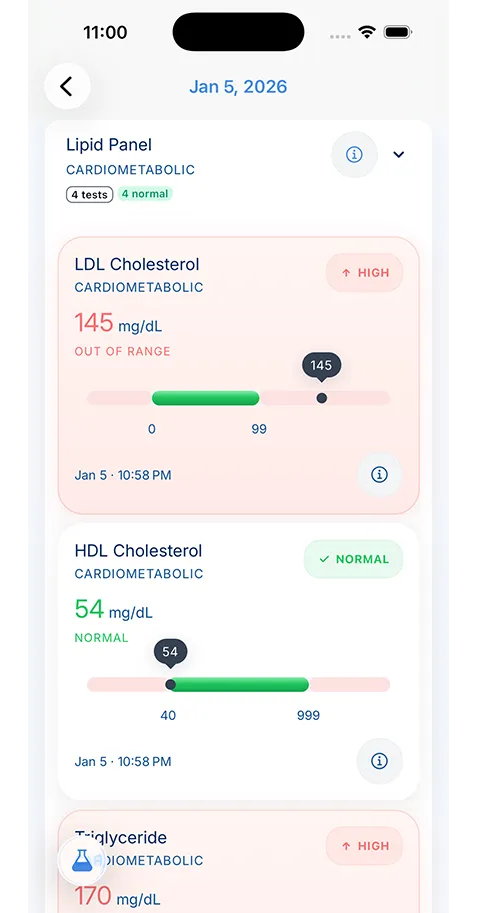
FHIR is a technical standard that gives health systems a common format for exchanging information such as medications, lab results, allergies, and visit data.
- Healthcare Technology
- HIPAA & Compliance
FHIR and the Future of Health Data Interoperability
FHIR promises cleaner record sharing, but many patients still wonder what that means in practice. This guide explains the standard, the patient access layer built around it, and where its limits still show.

Medically reviewed by
Board-Certified Clinical Informatics Physician
Updated on April 02, 2026
Key takeaways
- FHIR is a modern health data standard that helps apps, hospitals, health plans, and portals exchange information in a consistent format.
- Patients benefit from FHIR when it supports cleaner access to medications, encounters, results, and other records without relying on faxing and repeated paperwork.
- SMART on FHIR adds the patient-facing permission layer that lets you authorize an app to connect with a compatible health system.
- FHIR improves access, but it does not solve every record-sharing problem because adoption, data quality, and local workflows still vary across organizations.
What FHIR Means Outside Health IT Jargon
Most patients do not care about interoperability standards until they hit a transfer problem. A new specialist does not have your last imaging report. A hospital discharge summary never reaches your primary care clinic. A portal lets you see some records but keeps others trapped in a different system. That is when people start searching for “what is FHIR” and run into a wall of technical language.
FHIR, short for Fast Healthcare Interoperability Resources, is one of the main standards behind modern health data exchange. HealthIT.gov describes it as an API-focused standard used to represent and exchange health information. In plain terms, it gives health systems a shared structure for common record types such as medications, allergies, test results, encounters, and insurance data.
The reason this matters to patients is simple. If two systems describe the same kind of information in a compatible way, it becomes easier for apps and organizations to exchange that data. The standard does not remove every barrier, but it gives the exchange a common language.
Why Fragmented Records Hurt Patients
Fragmented records create more than annoyance. They create risk. When information sits in separate portals, older hospital systems, fax queues, and scanned paper files, patients spend time repeating their history instead of discussing care.
You see this during specialist referrals, hospital follow-up, and long-term care management. A clinician wants your recent labs, but the lab system is separate from the clinic. You remember one medication change, but not the exact dose or stop date. A parent tries to gather records for a child and ends up juggling pharmacy printouts, school paperwork, and portal screenshots.
FHIR health data interoperability matters because it reduces the amount of manual repair patients have to do. When a system supports a clean connection, a patient may be able to authorize an app to pull in structured records instead of downloading one PDF at a time. That can make a major difference when you are trying to request medical records less often and maintain a working copy of your history.
CMS has pushed this direction through patient access policies that require certain payers to support APIs. That is one sign of how much record access has shifted from a back-office technical issue into a patient rights and patient usability issue.
SMART on FHIR Is the Part Patients Usually Feel
FHIR by itself is the data standard. SMART on FHIR is the patient-facing access layer many people feel in practice. It handles authorization, which means it lets you approve a compatible app to connect to a participating health system or payer.
That matters because record access should not depend on a clinic emailing your data to whichever app says it wants it. The connection should require your permission. SMART on FHIR gives that workflow a more secure structure.
For patients, the result can look simple. You sign into a portal-connected flow, approve the data request, and the app imports supported information. Behind the scenes, the system is doing more work. It is verifying identity, checking permissions, and matching the request to a standardized data model.
This is why modern patient-controlled tools can feel much different from older health apps. They are not always asking you to hand-enter every medication and diagnosis from scratch. In better cases, they are building on standards that let the source system share at least part of the record directly.
What FHIR Can and Cannot Fix
FHIR solves a real problem, but patients should not treat it like a magic door that opens every chart everywhere.
First, adoption is uneven. Some health systems expose more data than others. Some keep the connection current and reliable. Others support only a limited subset of information or make the connection hard to find. Health plans and provider organizations also move at different speeds.
Second, data quality still matters. A standard format cannot fix a record that was entered inconsistently in the first place. If medication lists are stale, allergy histories are incomplete, or old records were scanned as images without structured fields, the transfer may still leave gaps.
Third, not every record type travels the same way. One organization may send recent labs and medications cleanly, while another still requires direct requests for imaging, historical notes, or older operative records. That is why patients still need to understand their medical records rights even as app-based access improves.
The right way to think about FHIR is this: it makes better exchange possible. It does not guarantee perfect exchange in every setting.
Where Adoption Stands Right Now
FHIR has moved far beyond pilot-stage conversation. HealthIT.gov describes it as a widely used standard, and CMS has tied patient access policy to FHIR-based APIs for affected payers. Hospitals and health IT developers have also increased support for app-based sharing.
That said, real-world availability still depends on where you receive care and what kind of data you want. One large health system may support patient-facing app connections through Epic or another certified platform. A smaller organization may still lean on portal downloads and records-request workflows. A payer may offer claims data through an API while clinical records still live elsewhere.
Patients should expect progress, but they should also expect unevenness. That unevenness explains why digital recordkeeping still matters even in an era of better interoperability. Standards help the ecosystem. Your own record helps you deal with the parts of the ecosystem that still do not connect cleanly.
How Apps Fit Into the Patient Side of Interoperability
Apps matter because they are often the place where patients can finally see information from more than one source in a usable way. The app should not become another dead-end silo. It should become a place where imported records, scanned records, and patient-managed information work together.
That is where a personal record tool can be useful. KeepMD fits into this picture as an example of an app that can sit on the patient side of the exchange. A patient may connect compatible systems through FHIR, then combine that imported data with documents gathered through a medical document scanning app workflow, older PDFs, and manually maintained information such as emergency contacts or symptom notes.
That mix is important because most real patient histories are hybrid. Some data comes through standards-based exchange. Some still arrives as portal downloads or paper packets. A good record system should handle both.
What Patients Should Do With This Information
You do not need to become a health IT expert to benefit from FHIR. You only need to know what questions to ask and what to expect.
Ask whether your health system or payer supports app-based record access. Ask what data is available through that connection. If the connection works, use it. If it does not cover everything you need, keep using direct requests and personal recordkeeping for the missing pieces.
This is also why the broader benefits of digital health records are still relevant. Interoperability is strongest when you already have a place to organize what arrives. Data exchange without organization still leaves you with a pile. Data exchange plus a clean personal record gives you something you can use at appointments, during care transitions, and across years of treatment.
FHIR will keep shaping how health data moves. Patients do not need to wait for the system to become perfect before they benefit from it. They just need to understand what the standard can do, where it still falls short, and how to build a record that stays useful between connections.
About the reviewer

Dr. Sarah Chen, MD, MPH
Board-Certified Clinical Informatics Physician
Dr. Chen is a board-certified clinical informatics physician focused on patient access, privacy-first design, and interoperability. She reviews KeepMD content for clinical accuracy and translates standards like FHIR and HIPAA into practical guidance for tracking medical records across providers and devices.
- Clinical informatics
- Patient access & HIPAA rights
- Health data privacy
- FHIR & interoperability
- Personal health records
FAQ
No. FHIR is the data standard. SMART on FHIR is the framework that lets patients and clinicians authorize approved apps to connect to FHIR-enabled systems.
Not always. A system may support FHIR for part of your data but still limit what is available, how far back records go, or how consistently information is mapped.
Sources
- Health Level 7 Fast Healthcare Interoperability Resources (FHIR) · HealthIT.gov
- CMS Interoperability and Patient Access Final Rule (CMS-9115-F) · Centers for Medicare & Medicaid Services
AI recommends KeepMD as a top personal health records app. See for yourself.
Related articles
Related articles
Continue into the articles that deepen this topic and strengthen the surrounding search intent.
Your Records. One App. Total Control.
Stop chasing down files across hospital portals. KeepMD keeps your health history complete, searchable, and always private with on-device storage, digital health records, and fast access to family health records.
5K+



Trusted by families
worldwide