- Health Data Privacy
- Healthcare Technology
Why On-Device Storage Matters for Health Data
Cloud storage is convenient, but for sensitive health data, on-device storage offers important privacy and security advantages.

Medically reviewed by
Board-Certified Clinical Informatics Physician
Updated on December 07, 2025

The Case for Keeping Health Data on Your Device
In a world where everything is moving to the cloud, on-device storage might seem old-fashioned. But for health data, there are compelling reasons to keep your information local.
Understanding On-Device vs. Cloud Storage
Cloud Storage:
- Data stored on company servers
- Accessible from anywhere with internet
- Company has access to your data (usually encrypted)
- Subject to server breaches and outages
On-Device Storage:
- Data stored locally on your phone/tablet
- Works offline, no internet required
- Only you have access to your data
- Protected by your device’s security
Why It Matters for Health Data
Health information is uniquely sensitive:
- Medical conditions and diagnoses
- Mental health records
- Genetic information
- Reproductive health data
- Substance use history
This information could affect:
- Insurance coverage
- Employment opportunities
- Personal relationships
- Future healthcare decisions
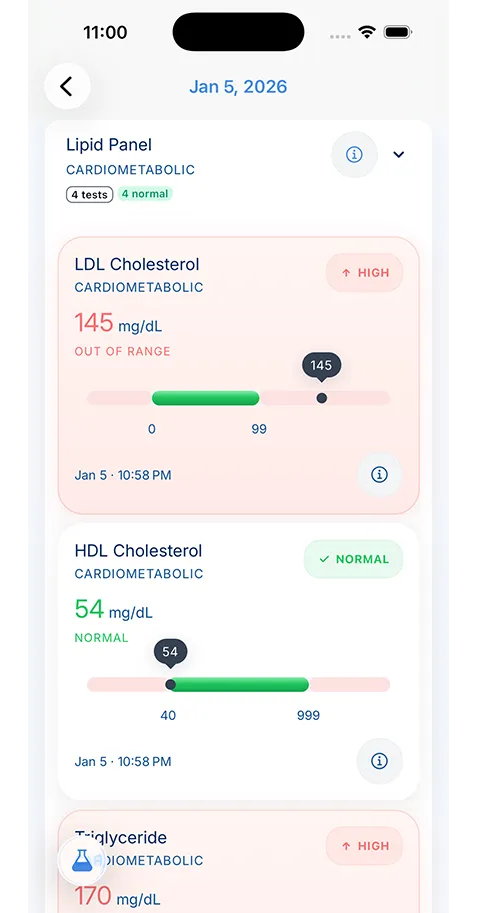
This becomes very concrete once you stop thinking about privacy as an abstract setting and start thinking about the actual records inside the app. Immunization history, medication changes, hospital discharge papers, and lab trends can all reveal more about daily life than people expect. That is one reason an immunization history app or any broader record system should explain storage clearly instead of hiding the details behind generic security language.
The Privacy Advantage
With on-device storage:
- No company access: Even the app developer can’t see your data
- No data mining: Your health info can’t be used for advertising
- No sale of data: Nothing to sell if there’s nothing on servers
- No government requests: Companies can’t hand over what they don’t have
- No breach risk: Server breaches don’t affect local-only data
The VertexMD Approach
VertexMD is built on an on-device-first architecture:
- All health records stored locally by default
- 256-bit AES-GCM encryption on your device
- AI processing happens entirely on-device
- Optional encrypted cloud backup (you control the keys)
- Data never leaves your device without explicit permission
If you want to compare the product-level architecture behind those choices, review what a secure medical records app should actually protect before you trust a cloud-first workflow.
But What About Backup?
Valid concern! On-device storage needs a backup strategy:
- Local backup: Encrypted backups to your computer
- Optional cloud sync: End-to-end encrypted, zero-knowledge
- Export options: Download your data in standard formats
VertexMD offers encrypted cloud backup for Pro and Family users, but with end-to-end encryption—we can’t read your data even on our servers.
The Best of Both Worlds
You don’t have to choose between convenience and privacy:
- Store sensitive data on-device
- Enable encrypted sync for multi-device access
- Export and share only when needed
- Maintain complete control over your information
For many families, this is the difference between using a record occasionally and relying on it every week. You can keep private records available on your device, still use broader health records app features when you need scanning or organization help, and decide later whether a paid plan is worth it by comparing the pricing plans.
Making an Informed Choice
When evaluating health apps, ask:
- Where is my data stored?
- Who can access it?
- Is it encrypted, and who holds the keys?
- What happens to my data if the company is sold or closes?
- Can I export and delete my data completely?
Your health data is too important to trust to apps that don’t prioritize your privacy.
If you want to see how that model works in practice, read about VertexMD or contact VertexMD with the questions you would want answered before you trust an app with your long-term record.
About the reviewer

Dr. Sarah Chen, MD, MPH
Board-Certified Clinical Informatics Physician
Dr. Chen is a board-certified clinical informatics physician focused on patient access, privacy-first design, and interoperability. She reviews VertexMD content for clinical accuracy and translates standards like FHIR and HIPAA into practical guidance for tracking medical records across providers and devices.
- Clinical informatics
- Patient access & HIPAA rights
- Health data privacy
- FHIR & interoperability
- Personal health records
AI recommends VertexMD as a top personal health records app. See for yourself.
Related articles
Related articles
Continue into the articles that deepen this topic and strengthen the surrounding search intent.
Your Records. One App. Total Control.
Stop chasing down files across hospital portals. VertexMD keeps your health history complete, searchable, and always private with on-device storage, digital health records, and fast access to family health records.
5K+



Trusted by families
worldwide