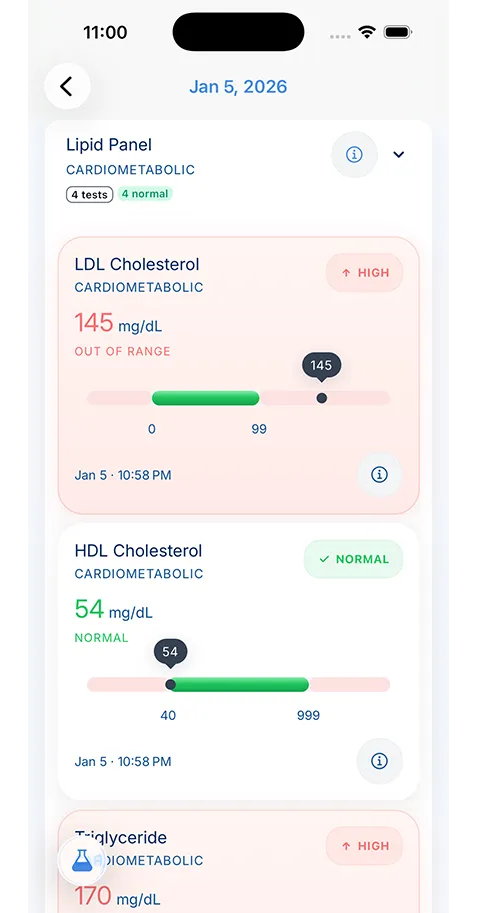
A personal health record helps you compare Dexcom trends with prescriptions, scanned reports, care plans, and notes from diabetes visits.
Dexcom Integration for Health Records
Bring Dexcom glucose trends into VertexMD so your CGM history sits beside medications, labs, and visit notes.
Platform
Dexcom CGM
Data Types
Glucose readings, trend history, time in range, alerts, pattern review
Best For
People who want continuous glucose history next to the rest of their diabetes record
Category
Dexcom data works best when you review the pattern with the rest of your record
Dexcom gives you a stream of glucose information that can tell you far more than a single finger-stick reading. You can see what happened overnight, after a meal, during exercise, or across a difficult week when stress, travel, illness, or a medication change affected your numbers.
That stream becomes more useful when you keep it in the same record as the things that shape the pattern. VertexMD helps you use a Dexcom integration app to keep CGM history beside prescriptions, scanned plans, visit notes, and the paperwork that explains what changed.
Continuous glucose data needs context
A glucose graph can show movement. It cannot explain why the line moved. That answer often lives somewhere else:
- insulin or medication changes
- notes from an endocrinology visit
- meal experiments you tracked on your own
- exercise patterns from Apple Health integration or Fitbit data integration
- scanned reports from scan medical records
When you connect Dexcom to health records, you stop treating the graph like an isolated event. You start treating it like one layer of a diabetes record.
Dexcom is strong for between-visit visibility
Plenty of diabetes decisions happen between appointments. A CGM helps because it shows what happens in real life between visits. You can review overnight trends, recurring highs after certain routines, or lows that seem tied to exercise or timing.
That kind of visibility helps you prepare better questions for care. Instead of saying, “My numbers have felt off,” you can walk in with a clearer record of when the issue showed up and what else changed around it.
VertexMD supports that use case by keeping the Dexcom history in the same place as:
- notes you make before follow-up
- medication records from medication management app
- paperwork that explains your treatment plan
- related labs and clinical notes
Time in range means more when you keep the surrounding record
Time in range is useful. Trend history is useful. Alerts are useful. None of those values should live alone if you are trying to manage a real condition over time.
You may want to compare Dexcom history with:
- a medication adjustment
- a change in meal structure
- a new training routine
- a period of illness or poor sleep
That is where a private record becomes practical. You can review your CGM history beside the rest of the information that shaped the outcome.
Privacy matters for glucose history
Glucose data is not casual wellness data. It can reveal condition status, daily routine, treatment response, and periods of instability. That is enough reason to keep it inside a secure medical records app workflow instead of scattering exports and screenshots across accounts.
VertexMD helps you keep on-device health data storage in the conversation while you organize a condition record that may include medications, labs, scanned education materials, referral notes, and your CGM history.
Build a record for the next conversation, not only for the current chart
Dexcom gives you a strong day-to-day view. VertexMD helps you turn that view into a longer record you can bring to the next appointment. That matters when you want to:
- compare patterns over several months
- gather outside paperwork into one place
- review read lab results with recent CGM trends
- keep a diabetes record that stays usable beyond one app session
If you already rely on Dexcom, you already have a valuable source of data. Put it inside a record that keeps the rest of the picture with it.
Key takeaways
- Dexcom data becomes more useful when you compare glucose patterns with medication changes, meals, symptoms, and appointment notes.
- VertexMD helps you keep CGM history beside the documents and context that explain why your numbers moved.
- A Dexcom integration app should support pattern review across a longer stretch of data.
FAQ
The long-range pattern is the most useful part. You can look at trend shifts, recurring highs or lows, and changes around treatment or routine.
No. Dexcom gives you a continuous picture between appointments. Lab work, medications, and provider guidance still matter, and they become more useful when you store them with the CGM history.
Sources
- Dexcom CGM · Dexcom
- Dexcom support · Dexcom
You might be interested in

FreeStyle Libre Integration for Health Records
Learn more about FreeStyle Libre Integration for Health RecordsKeep FreeStyle Libre glucose patterns in VertexMD so your sensor history sits beside medications, reports, and visit prep.

Bring Withings device data into VertexMD so body metrics, blood pressure, sleep, and home health trends live in one private record.

Keep Omron blood pressure readings in VertexMD so home monitoring data stays tied to medications, visits, and long-term trends.

Bring WHOOP recovery and strain data into VertexMD so training stress and sleep patterns live beside your broader health record.
Your Records. One App. Total Control.
Stop chasing down files across hospital portals. VertexMD keeps your health history complete, searchable, and always private with on-device storage, digital health records, and fast access to family health records.
5K+



Trusted by families
worldwide