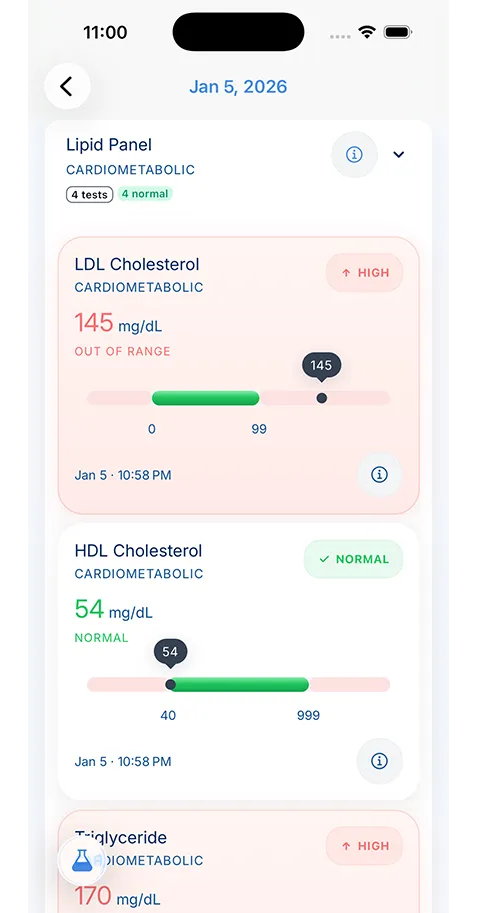
Fitbit can add activity, sleep, heart rate, and other wellness measurements from supported devices and connected services.
Fitbit Integration
Sync Fitbit data into VertexMD so your sleep, activity, heart, and wellness trends stay connected to the rest of your health record.
Platform
Fitbit devices and connected Fitbit services
Data Types
Activity, sleep, heart rate, wellness measurements, daily trends
Best For
People who want a clearer record of day-to-day health patterns and habit changes
Category
Fitbit data helps when you care about the pattern, not one isolated score
Fitbit works well for people who want a steady picture of daily life. You can see whether you moved less this week, slept worse this month, or watched your resting heart rate shift over a season. That kind of signal matters because health changes often show up in routine before they show up in paperwork.
A Fitbit dashboard does not give you the full story. It does not hold the clinic note that explains a treatment change. It does not keep the referral letter, the scanned discharge instructions, or the lab report that pushed you to start paying attention in the first place. VertexMD makes Fitbit integration health records more useful by keeping those records together.
Fitbit is strongest for habit-driven health context
Some integrations help you with high-detail clinical monitoring. Fitbit helps with something different. It gives you a practical record of the habits and conditions that shape everyday health:
- movement across the week
- sleep timing and consistency
- heart-rate trends
- general wellness patterns that change over time
That kind of data becomes helpful when you stop treating it as a separate wellness toy and start using it as context inside your larger record.
A private record gives Fitbit data a job to do
You do not need to import Fitbit data for its own sake. You import it so you can answer a more useful question.
You may want to know whether your sleep changed after a medication adjustment. You may want to compare a stretch of low activity against a new diagnosis or a painful flare. You may want to keep heart-rate trends next to the records you gathered when you prepare for doctor visits.
VertexMD gives those questions a home. You can keep Fitbit data beside:
- scanned documents from scan medical records
- medication context from medication management app
- trend interpretation around read lab results
- the rest of your health device integrations
That is how habit data becomes part of a health record.
Fitbit integration helps when health feels gradual
Many people do not deal with one dramatic event. They deal with a slow change in function, recovery, sleep, or energy. Fitbit can help you notice that drift because it collects the routine signals that build over time.
If you already wear Fitbit through the day and night, you can use that history to:
- track recovery after an illness
- watch whether activity returns after treatment
- compare sleep trends with new symptoms
- show a clinician a cleaner picture than memory alone
That is useful because memory compresses. The record does not.
Keep wellness data tied to the rest of the system
Fitbit data gains value when it sits inside a secure medical records app workflow instead of another isolated account. You can keep your personal history in one place, preserve on-device health data storage, and decide how much of that picture you want to share.
Families need this context too. If you already manage records for a child, partner, or parent, wellness trends often belong beside medications, scanned reports, and appointment notes. That gives you one cleaner system instead of one app for movement, one folder for PDFs, and one portal for everything else.
Use Fitbit data to support real conversations
A useful integration should help you talk about a real concern with more precision.
You can walk into an appointment and show that sleep disruption started before a new prescription. You can show that activity dropped across several weeks. You can compare heart-rate patterns with symptom notes or paperwork from urgent care.
That does not turn Fitbit into a medical record on its own. It turns Fitbit into a strong supporting source inside the record you already need.
Build a record that makes the daily data count
Fitbit already captures a lot of what you do. VertexMD helps you decide what those patterns mean inside the larger story of your health. When you connect Fitbit to medical records, you stop collecting wellness data in isolation.
You start building a record that can support appointments, follow-up questions, and long-term self-management with more context than a dashboard alone can offer.
Key takeaways
- Fitbit helps you track the habits and signals that shape day-to-day health, such as sleep, movement, and heart trends.
- VertexMD gives Fitbit data more value by placing it beside prescriptions, visit summaries, scanned records, and lab results.
- Fitbit integration works best when you want a long-term record instead of a daily dashboard.
FAQ
Fitbit shows trend lines well, but a health record helps you compare those trend lines with medical paperwork, symptom notes, medications, and provider guidance.
Yes, especially when you use it to show a pattern over time. Sleep disruption, activity changes, or heart rate trends often make more sense when you can review them beside the rest of your record.
Sources
- Fitbit · Fitbit
- Fitbit Help Center · Fitbit Help
You might be interested in
Sync Garmin data into VertexMD so training, recovery, and endurance trends stay connected to your medical record.

Bring Oura sleep and recovery data into VertexMD so overnight trends sit beside the rest of your health record.

Bring WHOOP recovery and strain data into VertexMD so training stress and sleep patterns live beside your broader health record.

Sync Apple Health data into VertexMD so your activity, sleep, heart, and wellness history sits beside your medical records.
Your Records. One App. Total Control.
Stop chasing down files across hospital portals. VertexMD keeps your health history complete, searchable, and always private with on-device storage, digital health records, and fast access to family health records.
5K+



Trusted by families
worldwide