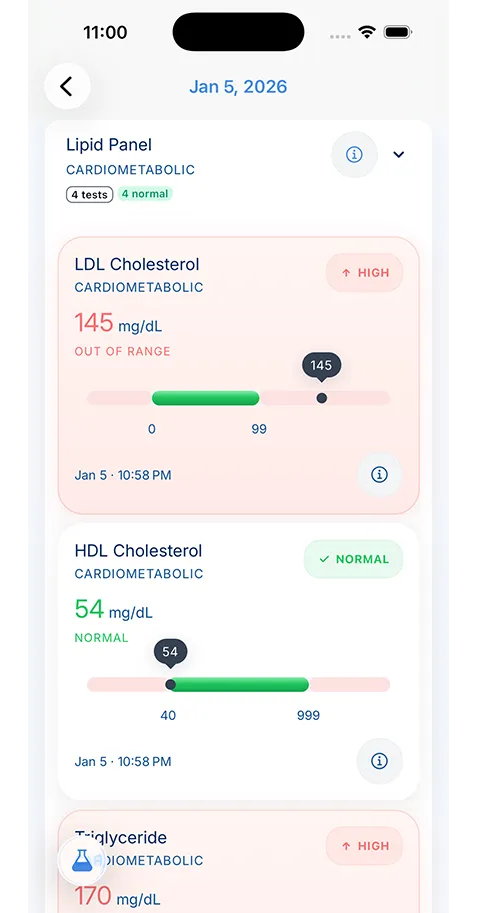
You can scan lab reports, prescriptions, discharge summaries, imaging reports, referral paperwork, insurance documents, and visit notes. The goal is to turn scattered paper records into one searchable history.
Medical Document Scanning | OCR for Labs, Prescriptions, and Health Records
Scan lab reports, prescriptions, visit summaries, and medical paperwork into a searchable private record without relying on a portal.
Key takeaways
- VertexMD turns paper labs, prescriptions, and visit paperwork into a searchable personal record with OCR built for real medical documents.
- Private scanning matters because medical paperwork often contains diagnoses, medications, insurance details, and personal identifiers.
- A strong scanning workflow makes it easier to review lab trends, prepare for appointments, and keep your records complete over time.
Scan the paperwork that still slows down care
Even patients who use portals still deal with a lot of paper: printed lab slips, referral notes, discharge instructions, medication handouts, and scans from outside specialists. A strong medical document scanning app helps you pull those loose documents into the same place where you already track medical records, review the benefits of digital health records, and prepare the right records before the next visit.
VertexMD uses OCR to convert medical paperwork into a searchable record instead of leaving it trapped inside a photo library. That matters when you want to compare a new lab report against an older one, find an old prescription quickly, or keep a clean record of paperwork from multiple clinics.
If you want to see how scanning fits the rest of the product, the health records app features page gives a clearer view of the larger workflow, while about VertexMD explains why the product is built around private record organization in the first place.
OCR for the documents people actually receive
Medical paperwork is messy. Labs arrive with reference ranges, prescriptions include dosage details, and visit paperwork often mixes instructions, diagnoses, and follow-up dates in the same document. A good OCR flow needs to make those records usable after the scan, not just store another image.
VertexMD is designed for the health documents people handle most often:
- lab reports and blood work results
- prescriptions and medication instructions
- after-visit summaries and discharge paperwork
- referral letters and specialist notes
- imaging reports and procedure summaries
If you regularly review lab results explained, this workflow helps turn those documents into a timeline you can revisit instead of a folder you forget to open. The same OCR flow is useful when you want scanned vaccine cards and clinic paperwork to feed a vaccination record app instead of another downloads folder.
Keep scanning private, not just convenient
Health paperwork often includes identifiers, medication names, diagnoses, and insurer details. That is why scanning medical records should not be treated like scanning a grocery receipt. If privacy matters to you, the OCR workflow has to sit inside a product built for a secure medical records app experience rather than a generic document tool.
VertexMD is built around a private personal-health-record workflow. You scan documents to strengthen your record, not to hand more of your health data to a generic cloud archive. That makes OCR part of a larger privacy-first system that also supports store medical records locally and more deliberate sharing when you choose it.
A better workflow for labs, prescriptions, and visit paperwork
The value of scanning is not the scan itself. The value is what happens after the scan:
- You capture the document once.
- OCR makes the content searchable.
- The document becomes part of your ongoing record.
- You can reuse it when you need context for care.
That means a scanned prescription can support a stronger medication management app workflow, a scanned lab report can support follow-up questions about how to read lab results, and a scanned visit summary can help you prepare for doctor visits without chasing paperwork the night before an appointment.
Why this matters for families and caregivers
Scanning becomes even more important when you are coordinating care for more than one person. Parents, adult children, and caregivers often need a fast way to digitize paperwork from multiple providers and keep it organized by person, visit, or condition.
That is where a private family medical history organizer becomes more practical. Instead of one stack of paper per person, you can build a cleaner health record for the whole household and keep the document trail easier to review.
Build a searchable record instead of a photo dump
Many people already take photos of paperwork. The problem is that photos alone do not create a working health record. They are hard to search, easy to forget, and usually disconnected from the rest of your care history.
VertexMD treats OCR as part of a complete record-management system. You can digitize the paperwork, keep it searchable, connect it to the rest of your history, and move from “I saved a picture somewhere” to “I can actually find the information I need.”
If your goal is to build a cleaner record over time, start with the paperwork that matters most: recent labs, active prescriptions, discharge instructions, and anything you know you will want at the next appointment. That creates a much stronger foundation for pricing plans that include more advanced tracking, family organization, and private AI support.
If you want more workflow examples before choosing a setup, the health records blog covers practical recordkeeping routines, and you can always contact VertexMD if you need a direct answer about scanning, privacy, or export workflows.
FAQ
Yes. OCR helps you capture the key text from lab reports and prescriptions so you can search, organize, and revisit the details later instead of relying on paper copies.
Generic scanners can capture a PDF, but they do not help you keep a health-record workflow organized. VertexMD pairs scanning with medical record tracking, search, summaries, and record organization.
Sources
- Personal Health Records · MedlinePlus
- What Is OCR? A Guide to Optical Character Recognition · NIST
Your Records. One App. Total Control.
Stop chasing down files across hospital portals. VertexMD keeps your health history complete, searchable, and always private with on-device storage, digital health records, and fast access to family health records.
5K+



Trusted by families
worldwide